


Meet: AI Brain Fry



When AI makes work faster than the human brain can comfortably keep up.
One of the promises of AI was that it would give us back time. Drafting would be faster. Research would take minutes instead of hours. Analysis could happen almost instantly. The repetitive parts of knowledge work would increasingly disappear, leaving people with more room for judgment, creativity and the kind of thinking machines cannot easily replicate.
And in many ways, that is happening. But something else seems to be happening alongside it: a particular kind of mental exhaustion that comes from constantly prompting, reviewing, checking, correcting, comparing and deciding what to do with an endless stream of AI-generated output.
Researchers have started calling it AI brain fry.
A recent Harvard Business Review article, based on research involving 1,488 full-time U.S. workers, defines it as mental fatigue caused by excessive use or oversight of AI tools beyond a person's cognitive capacity. Participants described mental fog, difficulty concentrating and slower decision-making after intensive interaction with AI.
The phrase sounds almost casual. The underlying problem is not.
AI can make a task easier while making the day harder
The strange thing about AI is that it can dramatically reduce the effort required to produce something while increasing the effort required to supervise everything being produced.
Ask AI to draft a proposal and the first version appears almost instantly. But someone still has to decide whether the thinking is sound, whether the facts are right, whether the tone works, whether anything important is missing and whether the output should be accepted, revised or thrown away entirely.
Then comes the next output. And the next.
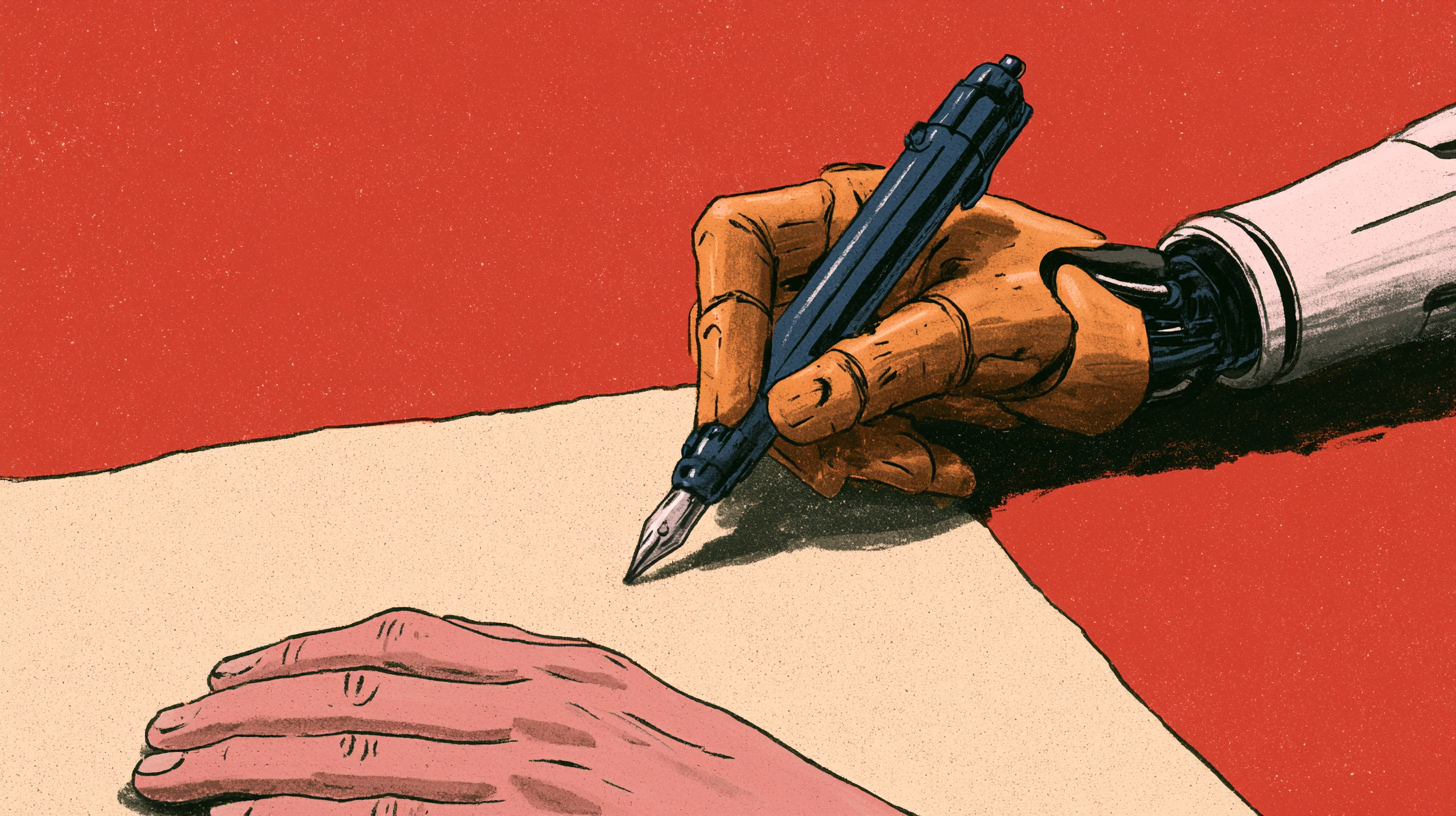
The human role gradually shifts from producing the work to monitoring, evaluating and deciding what happens to it.
That is not necessarily easier work. In the HBR study, employees whose AI use required high levels of oversight reported 14% more mental effort, 12% more mental fatigue and 19% more information overload.
The machine gets faster. The human brain does not
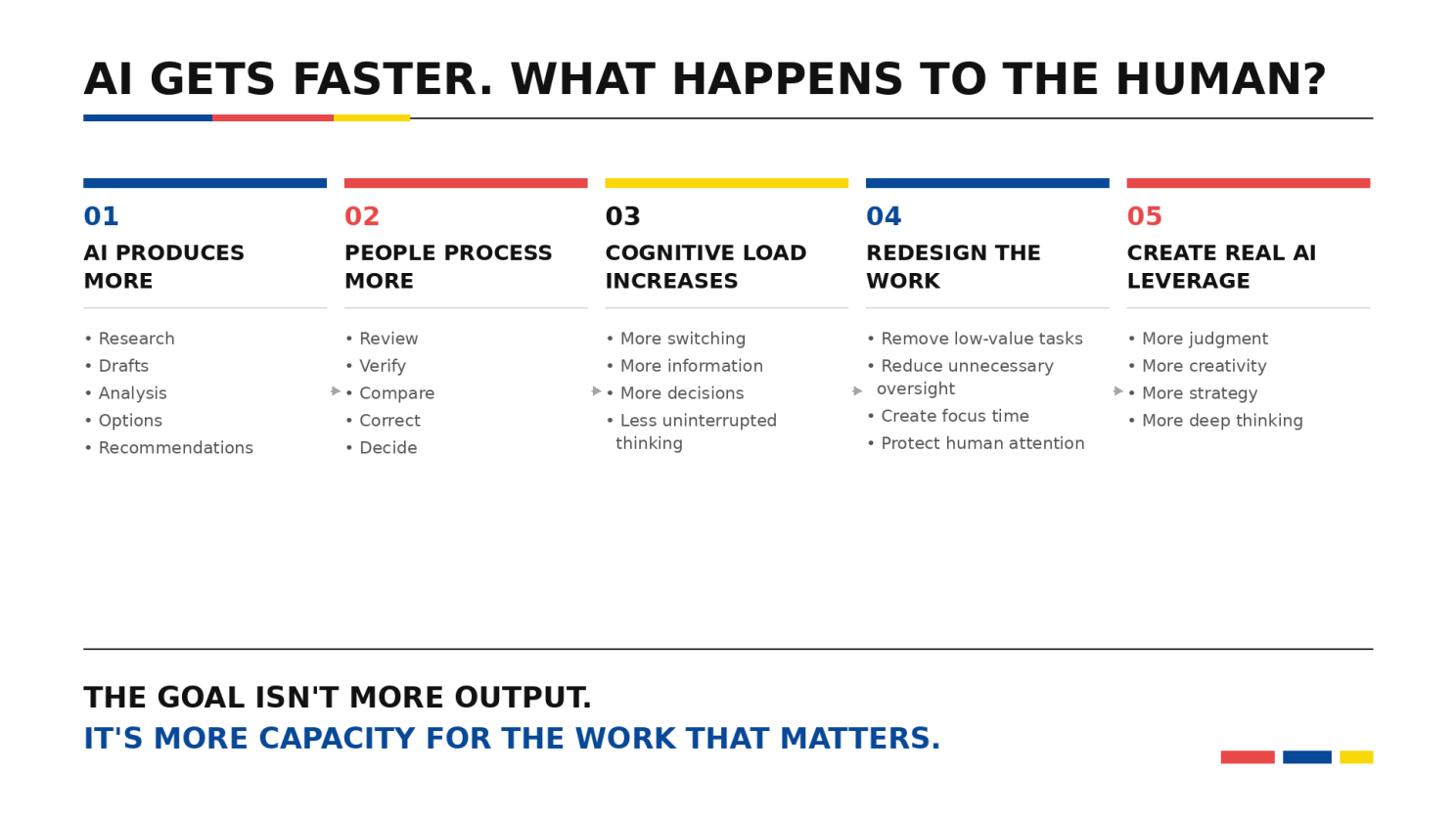
We may be confusing more output with more productivity
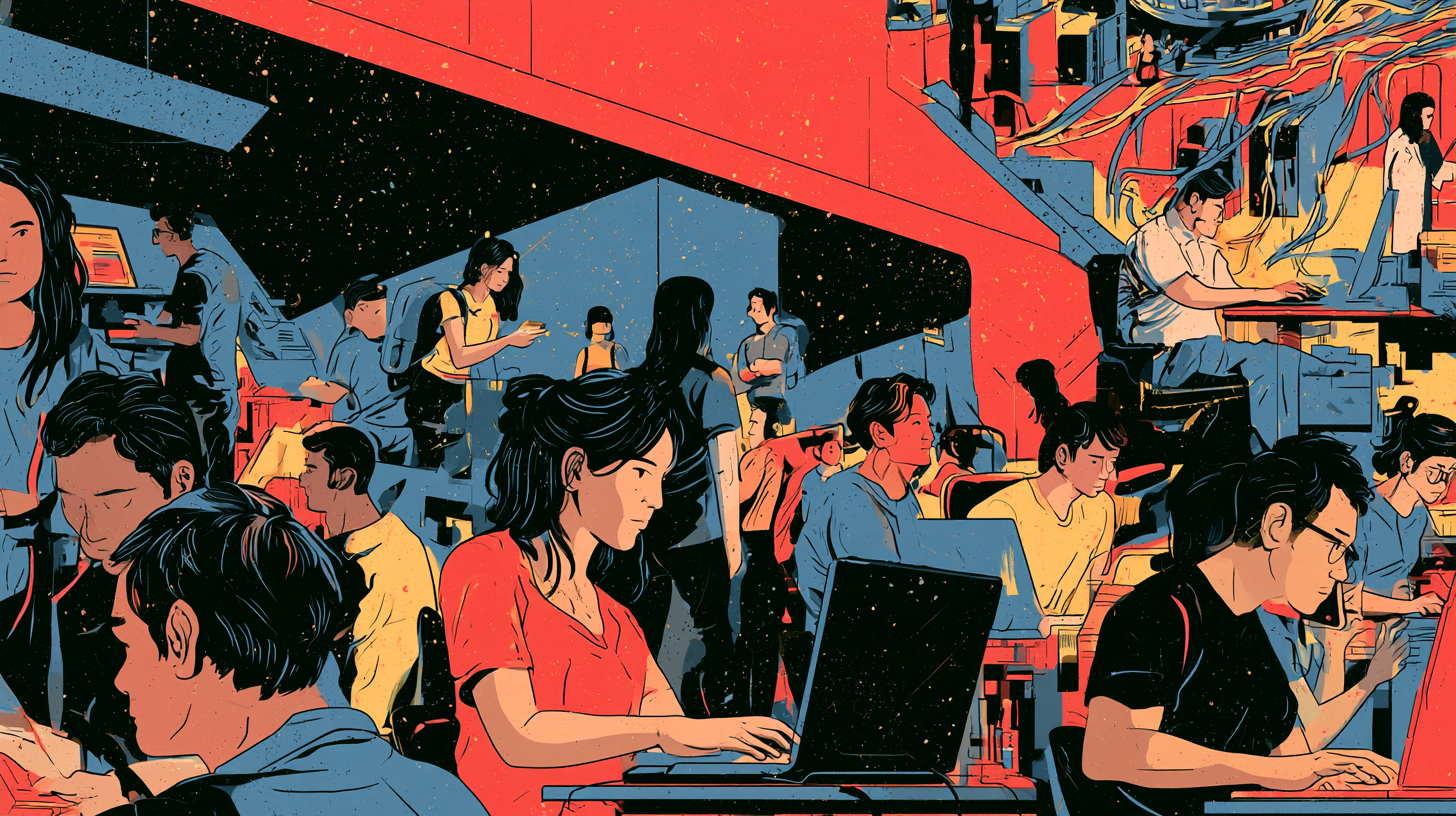
This becomes even more complicated because most knowledge workers were already operating inside fragmented environments before AI arrived.
Email. Slack. Meetings. Documents. Notifications. Browser tabs. Project-management tools. Requests from five different directions.
Now add several AI tools and agents operating at the same time.
You ask one to research a topic while another produces a presentation. A third drafts an email. You return to the research, evaluate its sources, correct an assumption, send another prompt, switch back to the deck, respond to a message and then try to remember what you were thinking about before all of that started.
An extraordinary amount may be happening.
But how much thinking is actually happening?
The research suggests this distinction matters. Workers who experienced AI brain fry reported substantially more decision fatigue, and the authors argue that intensive AI oversight can leave people with fewer cognitive resources available for the decisions that actually require human judgment.
That creates an interesting paradox. AI can increase the amount of work flowing through a person without necessarily increasing that person's capacity to absorb it.
AI should remove work, not simply add another layer to it
One of the most useful findings in the research is that not all AI use creates the same effect.
When AI genuinely replaces routine or repetitive tasks, it can help reduce burnout. The problem appears when technology increases workload or requires intensive supervision without meaningfully removing anything else.
That distinction should probably matter much more in how companies approach AI adoption.
If someone's old workload remains intact, but they are now also expected to learn new tools, write prompts, supervise outputs, check hallucinations, coordinate agents and somehow produce twice as much in the same number of hours, we have not really created leverage.
We have created another job on top of the existing one.
Which raises a deceptively simple question for leaders:
When we introduce AI into someone's workflow, what are we actually taking away?
If the answer is nothing, perhaps the productivity gain is not as straightforward as it first appears.
Human attention may become the scarce resource
For most of the AI era so far, we have talked about scarcity in terms of technology: access to the best models, computing power, data, technical skills.
But as AI becomes increasingly capable of generating almost unlimited information, options and output, the scarce resource may become something much more human: attention.
Knowing what deserves attention. Knowing what deserves skepticism. Knowing when to keep iterating and when to stop. Knowing which decision needs deeper thought and which one can safely be delegated.
Those abilities become more valuable, not less, when everything around us becomes faster.
And that may mean companies need to rethink what successful AI adoption looks like.
More prompts are not necessarily better. More agents are not automatically more productive. Higher AI usage does not necessarily mean better work.
Sometimes the smartest thing someone can do with an AI tool is stop using it for a while and think.
AI leverage should create more room for human thinking
At Remotify, we believe strongly in developing AI-leveraged talent. AI can help people learn faster, work more efficiently and take on increasingly sophisticated work. But leverage should mean that technology expands what people are capable of, not that people spend their entire day trying to keep pace with machines that never get tired.
The goal should be to use AI to remove lower-value work and create more space for judgment, creativity, relationships, strategy and deeper thinking.
Because the point of making work faster should not simply be to fill every minute we save with even more work.
Sometimes the real productivity gain is the space itself.
If your organization is thinking about how to build an AI-leveraged workforce while truly supporting the people behind it, it is a conversation worth having. Let’s chat.

Much Time
Onboarding?



Say Goodbye to High Costs!
Request Your Free Consultation Today and Save a Massive 70% on Your Workforce!
Related resources




Tell us about your plans to Remotify

