

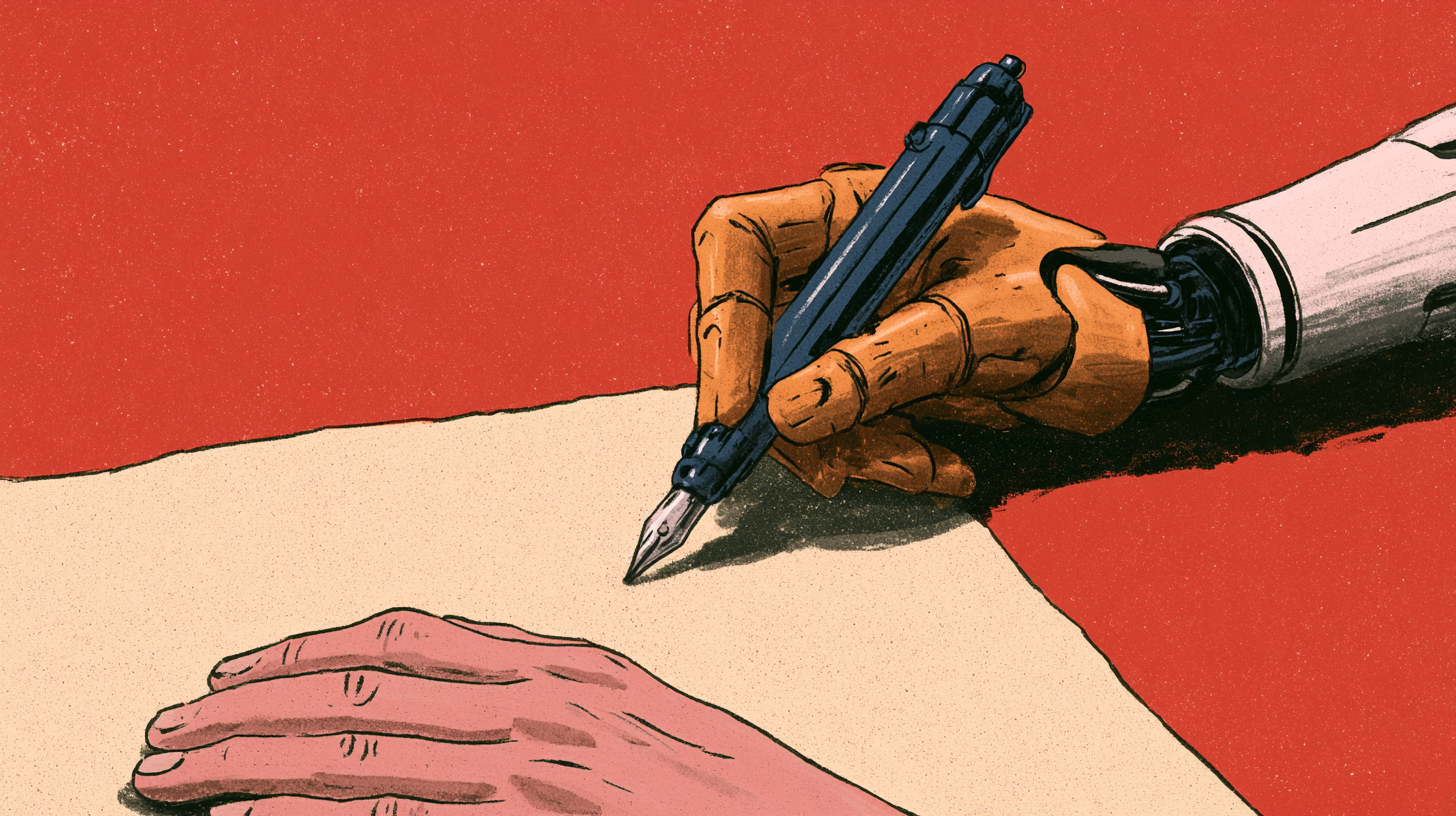
The AI Headcount Experiment Is Getting a Reality Check



The AI Headcount Experiment Is Getting a Reality Check
For a while, companies have been trying to answer one of the biggest questions surrounding AI: How many people will we still need when technology can do more of the work?
For some organizations, the answer came quickly. Automate the work, reduce the team, capture the productivity gains.
But we are now beginning to see what happens after those assumptions meet the reality of how work actually gets done.
Recent research from Robert Half found that 32% of U.S. hiring managers who eliminated positions after implementing AI later reinstated the same or similar roles. Among the reasons: 40% discovered they still needed institutional knowledge or context AI couldn't replace, 39% needed relationship management, and 38% required more human oversight and quality control than expected.
That doesn't mean AI won't reduce headcount.
In some functions, it almost certainly will. Roles will change, some will disappear, and organizations will continue finding ways to operate more efficiently with smaller teams.
But the early reversals point to a more nuanced lesson.
Automating part of a job is not the same as eliminating the need for the person doing it
Most knowledge work is made up of dozens of different activities. AI may be exceptionally good at drafting, summarizing, processing information, identifying patterns, or completing repeatable workflows. Yet the same role may also require judgment, context, relationships, accountability, exception handling, or simply knowing how the organization really works.
Those capabilities are harder to see on a process map. Sometimes companies only discover their value after they are gone.
We have already seen this play out beyond the survey data. Commonwealth Bank of Australia announced 45 redundancies alongside the introduction of an AI voice bot, then reversed the decision and acknowledged it had made an error. Call volumes had actually increased, and the bank determined that the roles were still required.
Research from Orgvue points to the same underlying problem. In its 2026 study, 32% of organizations that had made redundancies based on anticipated AI cost savings subsequently rehired staff. Perhaps more revealingly, almost a quarter of companies that made layoffs said those decisions had been based on general assumptions about what AI could do rather than an analysis of the specific roles involved.
There is another way to approach the same opportunity.
IKEA offers an interesting example. Its AI assistant Billie successfully took over a significant share of routine customer inquiries. But rather than treating automation as the end of the workforce conversation, IKEA looked at what its technology could do well and what customers still needed people to do.
Between 2021 and 2023, 8,500 employees were reskilled into areas including remote interior design, digital sales, relationship building, and more complex customer interactions. AI absorbed simpler enquiries while people moved toward work requiring greater human capability.
That distinction may become increasingly important as companies move beyond the first wave of AI adoption.
The lesson isn't that organizations shouldn't reduce headcount because of AI. It's that headcount reduction shouldn't be the starting assumption.
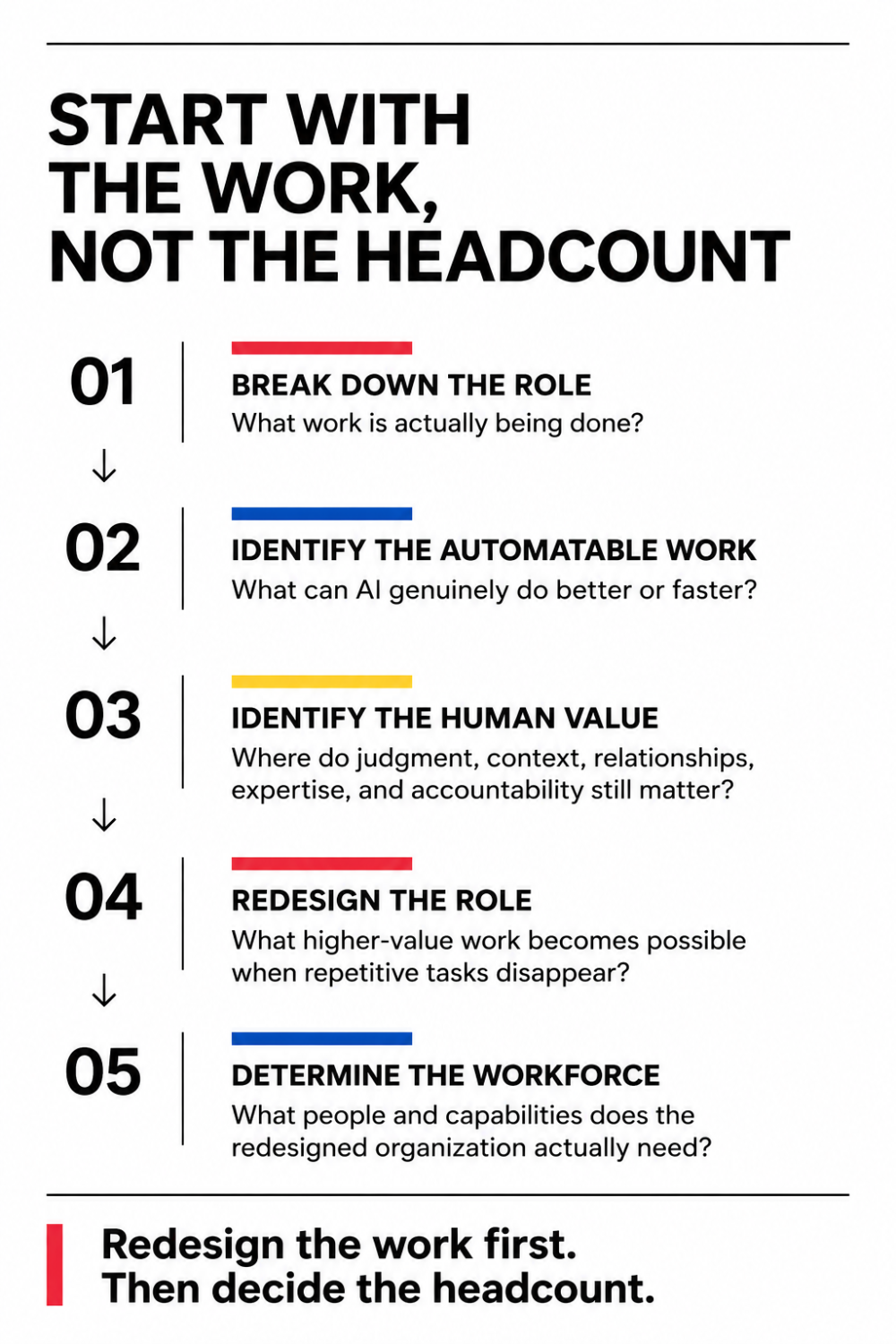
Start with the work.
Understand which tasks technology can genuinely perform better. Identify where human judgment, expertise, relationships, and accountability still create value. Look at what new capabilities become possible when repetitive work disappears. Then redesign the roles and determine what kind of workforce the organization actually needs.
Because there is another possibility hidden inside the productivity gains from AI.
Instead of asking only, "How many people can we remove?", organizations can also ask, "What more valuable work can these people now do?"
At Remotify, this is why we believe the future belongs increasingly to AI-leveraged talent. We expect teams to change and productivity per person to increase. But we also believe the greatest opportunity is to equip people to use AI to extend their capabilities, develop new skills, exercise better judgment, and move toward higher-value work.
AI may allow organizations to accomplish more with fewer people in some areas.
But the companies that create the greatest advantage from it may be the ones that become equally good at figuring out where people can accomplish more because of AI.
If your organization is thinking about how to redesign work and build an AI-leveraged workforce, it's a conversation worth having. Let's chat.

Much Time
Onboarding?



Say Goodbye to High Costs!
Request Your Free Consultation Today and Save a Massive 70% on Your Workforce!
Related resources

.png)




Tell us about your plans to Remotify

