

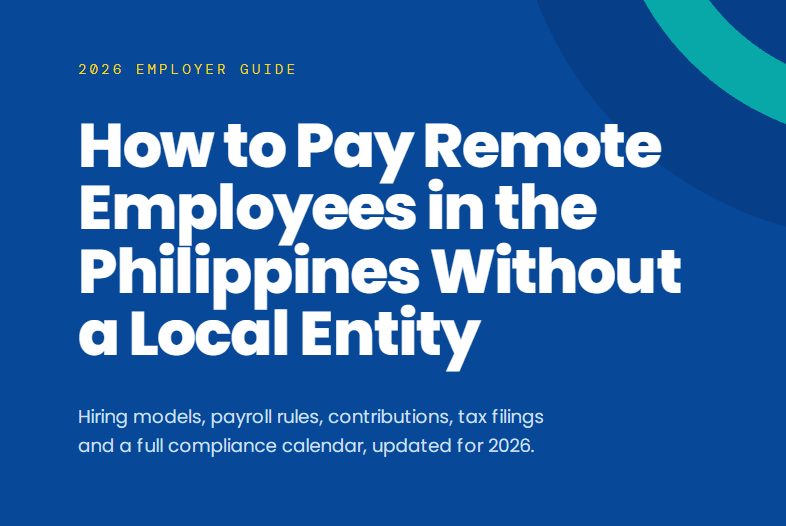
Hiring in the Philippines gives you access to skilled talent, but managing employment contracts, payroll, taxes and local compliance can be challenging without a local entity. Contractor arrangements can also create risks when the working relationship resembles employment.
Remotify’s 2026 Employer Guide helps you understand your hiring options, navigate Philippine employment requirements and calculate the true cost of employing remote talent.
What’s inside the guide?
- Hiring models compared: Understand contractors, Employer of Record (EOR) and setting up your own entity.
- Payroll and tax compliance: Learn about SSS, PhilHealth, Pag-IBIG, BIR filings and 2026 contribution rates.
- Employment costs: Explore salary-based examples and additional employer expenses.
- Compliance calendar: Keep track of payroll deadlines, tax filings and statutory contributions.
- Practical hiring toolkit: Access a 10-step hiring checklist and 12 questions to ask an EOR provider.
Who is this guide for?
This guide is designed for founders, HR leaders, finance teams and business owners outside the Philippines who want to hire Filipino talent, formalise existing contractor arrangements or scale their remote teams without establishing a local entity.
Make informed hiring decisions
Whether you're hiring your first employee or managing an existing remote team, this guide gives you the practical information needed to evaluate employment models, plan your budget and understand your compliance responsibilities.
Download the free 2026 Employer Guide and take the next step towards building your team in the Philippines.
CTA: Download the Free Guide
FAQs
1. Can I hire employees in the Philippines without setting up a local entity?
Yes. You can hire through an Employer of Record (EOR), which acts as the local legal employer and manages employment contracts, payroll and statutory obligations.
2. What are the payroll and tax compliance requirements for hiring in the Philippines?
Employers must manage income tax withholding, BIR filings, statutory contributions to SSS, PhilHealth and Pag-IBIG, and applicable employment benefits such as 13th-month pay.
3. What is the difference between hiring a contractor and using an Employer of Record?
Contractors generally manage their own taxes and benefits, while an EOR employs workers locally and manages payroll, statutory contributions and employment compliance.
4. How much does it cost to employ remote employees in the Philippines?
The total cost includes salary, employer contributions, 13th-month pay and any additional benefits or provider fees. The guide includes cost examples across four salary levels.
5. What should I look for when choosing an Employer of Record provider?
Evaluate local registration, employment contracts, payroll accuracy, compliance processes, transparent pricing, data protection and local HR support.